
How Polk County Property Records Work
Polk County keeps its property records as a linked set, not one master database. An address is a fine first key. The county cautions that not every physical address sits in the tax database. Write down the parcel number. Add the public-land-survey description too. Those keys open Beacon, the Register of Deeds index and the Treasurer's tax history. Rural parcels, newly addressed land and listings under a different municipality can defeat the address route. In those cases, start with the owner's name or the section, township and range.
Each record answers its own question. An assessment card is a strong owner and value lead, while a recorded deed shows the instrument the Register of Deeds accepted. A GIS polygon locates a parcel. A recorded survey or plat proves a boundary better. Permits, plats and tax cards each speak to different events on the same land. Polk County warns that compiled assessment, tax, title and survey data can hold imperfections, so keep the source and date beside each result rather than treating every portal as final.
- Search the county assessment and tax portal by address, owner name, parcel, municipality or PLSS.
- Copy the parcel number, owner display and legal description from the result.
- Use Beacon to view parcel, aerial, zoning, tax and survey context.
- Search the Register of Deeds by party, document number or PLSS when a recorded instrument is needed.
- Ask the proper custodian for an office-terminal search, a copy or an existing record that is not online.
Polk County Property Record Offices
The Polk County Register of Deeds is the land-record custodian for deeds, mortgages, satisfactions, certified survey maps, plats and federal tax liens. The county's Land Records Online hub links the tax, GIS, survey, permit and recorded-document systems together. The Treasurer's search explains tax-card access and past years. The GIS and Land Information office maintains the map and survey tools. These offices serve incorporated cities and townships alike. Amery and St. Croix Falls keep no separate recorders.
Polk County Register of Deeds
Polk County Government Center
100 Polk County Plaza, Suite 160
Balsam Lake, WI 54810
715-485-9240
Polk County GIS and Land Information
Polk County Government Center
100 Polk County Plaza, Suite 140
Balsam Lake
715-485-9256
Polk County Treasurer Tax Search
Guest access is available through the public portal.
Tax data is documented online from 2000 forward.
Search by name, address, parcel, municipality or PLSS.
Polk County Beacon Map and Record Hub
The Land Records Online hub keeps the county's separate services in one view. Its links cover assessment and tax records, GIS data, and interactive viewers. Surveys, land-use and sanitary permits, and recorded documents are there too. Beacon joined that lineup on December 7, 2023. It reaches assessment and tax information. Survey searches and property reports sit there too. Beacon complements the Register of Deeds system. Still, the launch did not fold every historical deed image or index into one viewer.
The Polk County Land Records Online hub links each service from one official page. The screenshot shows the hub's official page and its service links. Open the source page before choosing a tool. The right route depends on the need. It may be a tax year, map layer, survey, or recorded instrument.
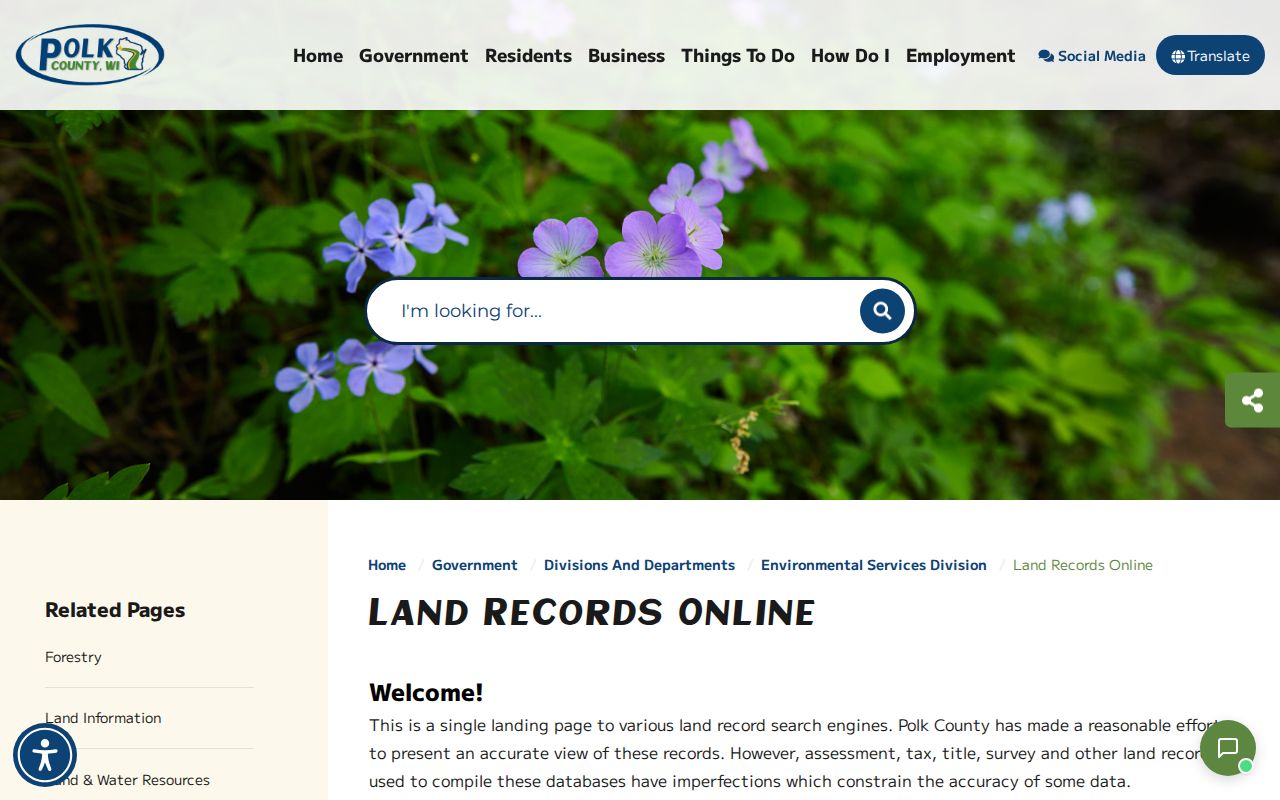
The hub is a directory, not the records themselves. Each custodian still holds the actual record.
Polk County Property Tax History
The Treasurer's instructions put tax information from 2000 forward online. That is a lot of history. Selecting a parcel opens every available year for that tax record. The site may show the current-year notice early. Municipal calculations can still be pending. A missing new-year bill does not mean the parcel has no tax record, and a truly missing parcel should go to the Treasurer with its municipality, owner name, parcel number, address and tax year.
Address search has its own trap. The county says not every physical property address is in its database. The official instructions recommend a different route. Enter the full last name plus the first two or more letters of the first name, then clear the other fields, including the address. That documented tip usually beats spelling variants.
The Polk County property-tax search instructions lay out the documented search choices. That official page leads into the tax portal.
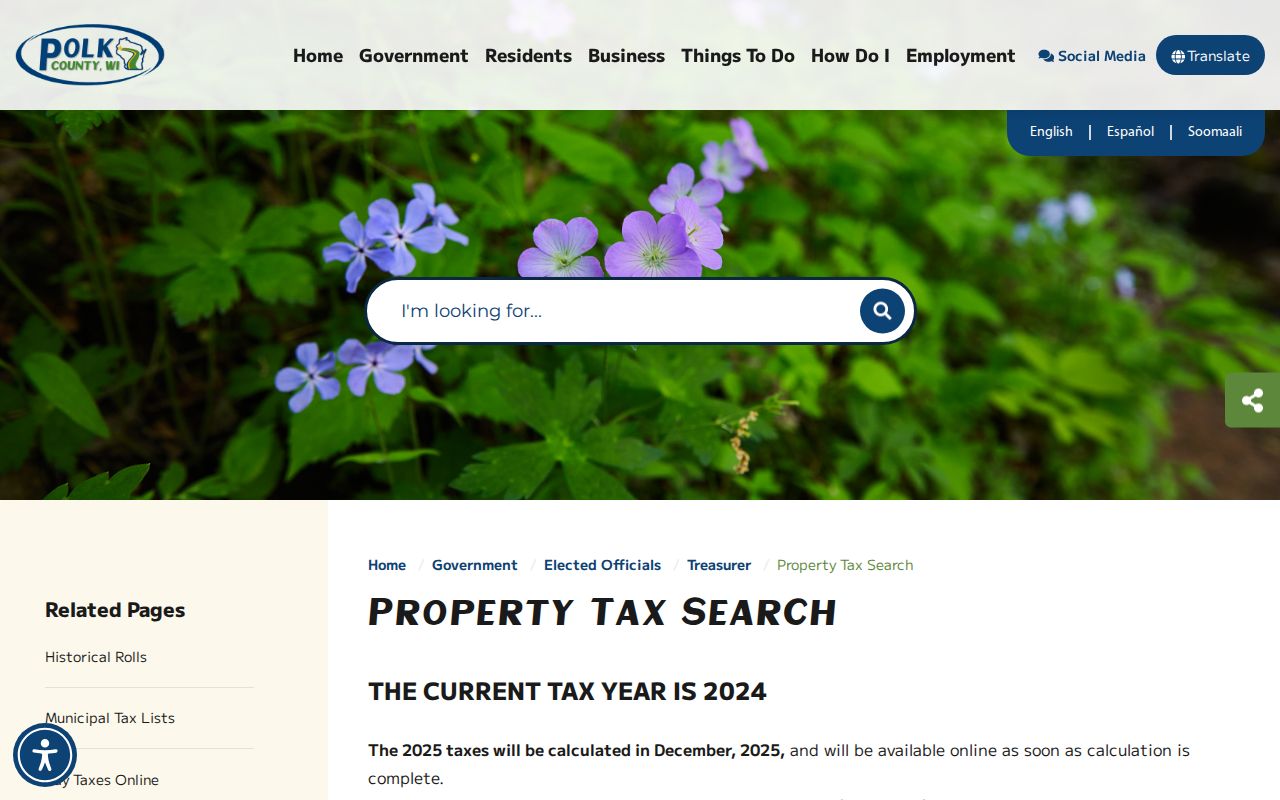
Pull the parcel record from the portal. For a missing year, a payment status question or an address problem, ask the Treasurer directly.
Polk County Property Record Types
Different Polk County records preserve different events. A tax record identifies the parcel and its annual figures. A deed transfers an interest once recorded. A mortgage or satisfaction tracks a lien instrument. A plat or certified survey map records land divisions, while a permit file documents a government review or application rather than ownership. The table separates these sources so a search never mistakes a map, tax card and deed for one record.
| Record Type | What It Documents | Kept By | Access |
|---|---|---|---|
| Deeds | Transfers and other recorded interests | Register of Deeds | Laredo, Tapestry or office |
| Mortgages and liens | Recorded security interests and releases | Register of Deeds | Recorded-document search |
| Tax and assessment | Parcel, owner display, value and tax-year details | Treasurer and assessment portal | Public guest portal |
| Plats and parcels | Map context, legal descriptions and land divisions | GIS, Surveyor and Register of Deeds | Beacon, survey index and recorded copy |
| Permits | Land-use, sanitary, zoning and project records | County or city custodian | Ascent tracker, forms or records request |
A transfer begins with the Register of Deeds. Old tax years live in the Treasurer's search. So do current tax amounts. Beacon and the Survey Index supply parcel location and survey context, while recorded-document access runs through Laredo Anywhere, a subscription service, and Tapestry, a pay-as-you-go option. See the Polk County deed-records search for the instrument trail and the Polk County tax lookup for tax-year detail.
Polk County Deed Images and Index Years
Two dates anchor Polk County's online land records. The Register of Deeds offers images back to 1933. The name index only reaches 1995, though staff keep back-indexing older books. A deed image can sit in the archive even when a grantor search misses it. Never assume 1995 starts a parcel's title history. If a search stalls at that line, ask the office about the older image, deed book or index.
Online access itself began in 2008, the county says. That timeline explains why the image archive, the index and the modern tax and GIS portal behave differently. Treat a name search only as a finding aid. For a chain-of-title question, copy the instrument number and legal description from each result. Then search the preceding grantor as your next name.
The official Register of Deeds page explains office access and return options. A hard copy by mail needs a self-addressed stamped envelope; a PDF request needs an email address.
Polk County Parcel and Survey Search
The Polk County survey index is richer than a plain map label. Its published fields cover instrument type and survey number. They also list section, township and range. Surveyor name and survey date appear as well. A survey number may open a non-recorded survey document when one exists. A recorded survey instead comes through Laredo, Tapestry or the Register of Deeds office. Note which document type you pulled.
Beacon ties parcel data to maps, aerial imagery, zoning permits, tax data and survey material. The county's GIS Data Portal supplies the base datasets. Together they connect an address to a parcel and legal description. The county publishes no fixed APN prefix or parcel-number range for Polk County. Copy the parcel ID exactly as shown rather than guessing its format.
When a boundary truly matters, rely on the recorded plat. Rely on a certified survey map. A licensed surveyor can also settle it. A tax parcel polygon is a locator layer, not a legal boundary determination.
The 1887 Polk County Plat Book
The Wisconsin Historical Society has digitized an 1887 Polk County plat book. It was drawn from actual surveys and county records. Its catalog includes village, city and township plats. The pages preserve an older geography of survey descriptions, roads and named communities. They help explain why an old deed cites a lot, block, township or road. No current street address matches some of those places.
Open the Society's 1887 plat-book record to browse the catalog and images. The title page identifies the volume as a county land-record collection.
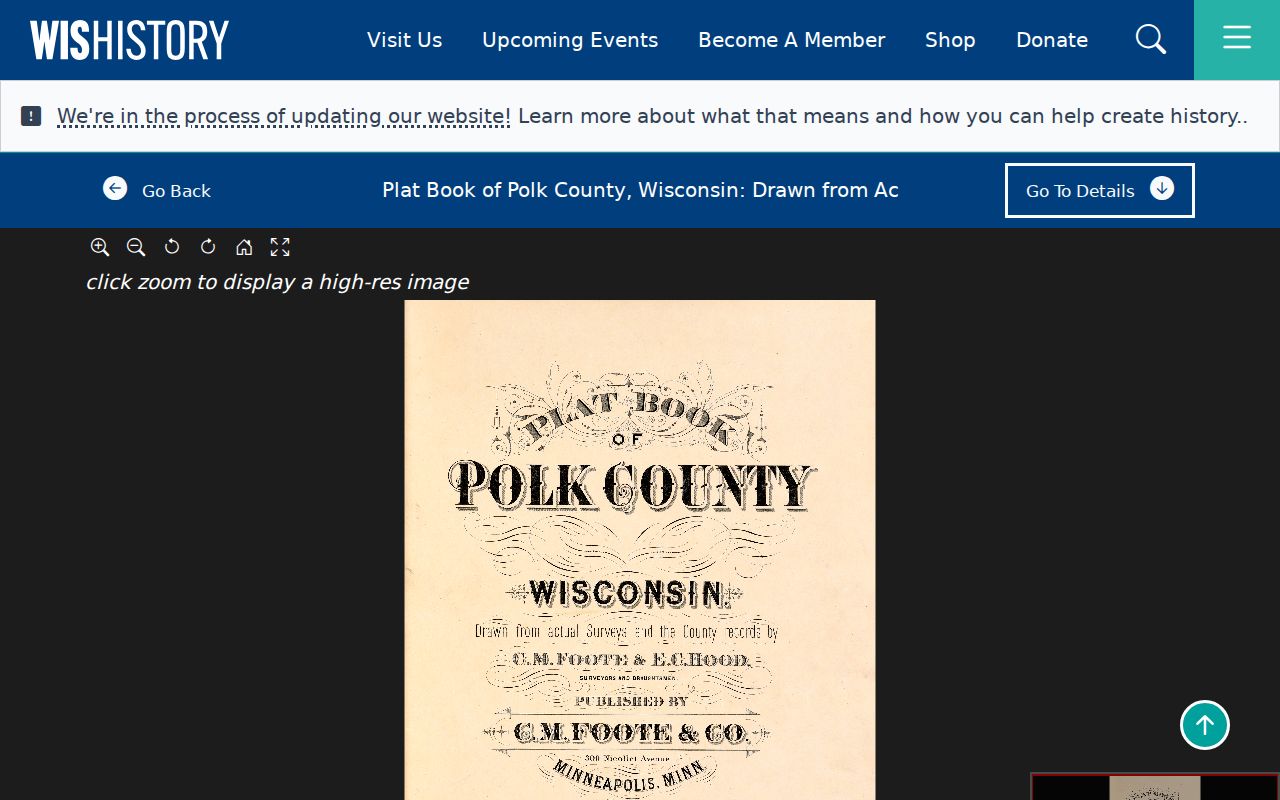
The plat is historical context, not proof of today's parcel boundary or ownership.
Polk County City and Town Boundaries
Polk County contains 36 municipalities. A postal address does not always name the government handling a permit. St. Croix Falls shows the problem clearly. The city and the town are separate governments with separate offices. The town's permit page also points to county shoreland, floodplain and sanitary rules. Check the tax municipality before sending a zoning or building question to City Hall. Beacon's corporate-limits layer helps too.
Amery offers a different lens on local records. Its history runs through the Apple River and early lumbering. Its zoning map and permit form add municipal land-use context. In both communities, the county holds the deed, assessment, tax and parcel records. A city form can document a permit application or planning decision. The application itself never proves the work was approved or finished.
Polk County Court and Estate Records
Some property questions end up in court records. Wisconsin Circuit Court Access offers public case information for Polk County, and courthouse terminals provide an offline route. A foreclosure, probate, partition, quiet-title or boundary case can explain why a deed or lien exists. The docket itself is not the recorded property instrument. Search by a name already tied to the parcel or deed. Then confirm any transfer with the Register of Deeds.
When land passes after a death, the probate file may hold a will, inventory, order or personal-representative deed. The land instrument belongs in the deed index. A death certificate is a separate vital record with eligibility limits. The Wisconsin Department of Health Services sets out the application and access rules. The county Register of Deeds issues local certified copies.
Wisconsin Circuit Court Access is the public case-search entry. Sealed and confidential material stays restricted.
Polk County Deed-Fraud Alerts
Polk County links to a property-fraud alert signup service through its land-records resources. The service works as a notice layer if county coverage is available at enrollment. It is not a deed search. It is not a title report or a promise that every filing triggers a notice. Read the provider's enrollment terms. Keep the Register of Deeds as the source for any recorded instrument.
The county lists the property-fraud alert service on its Land Records Online hub as an entry point for signup. For a suspicious letter or unexpected document, compare its instrument number with the official county index. Then call the Register of Deeds at the number published on the county site.
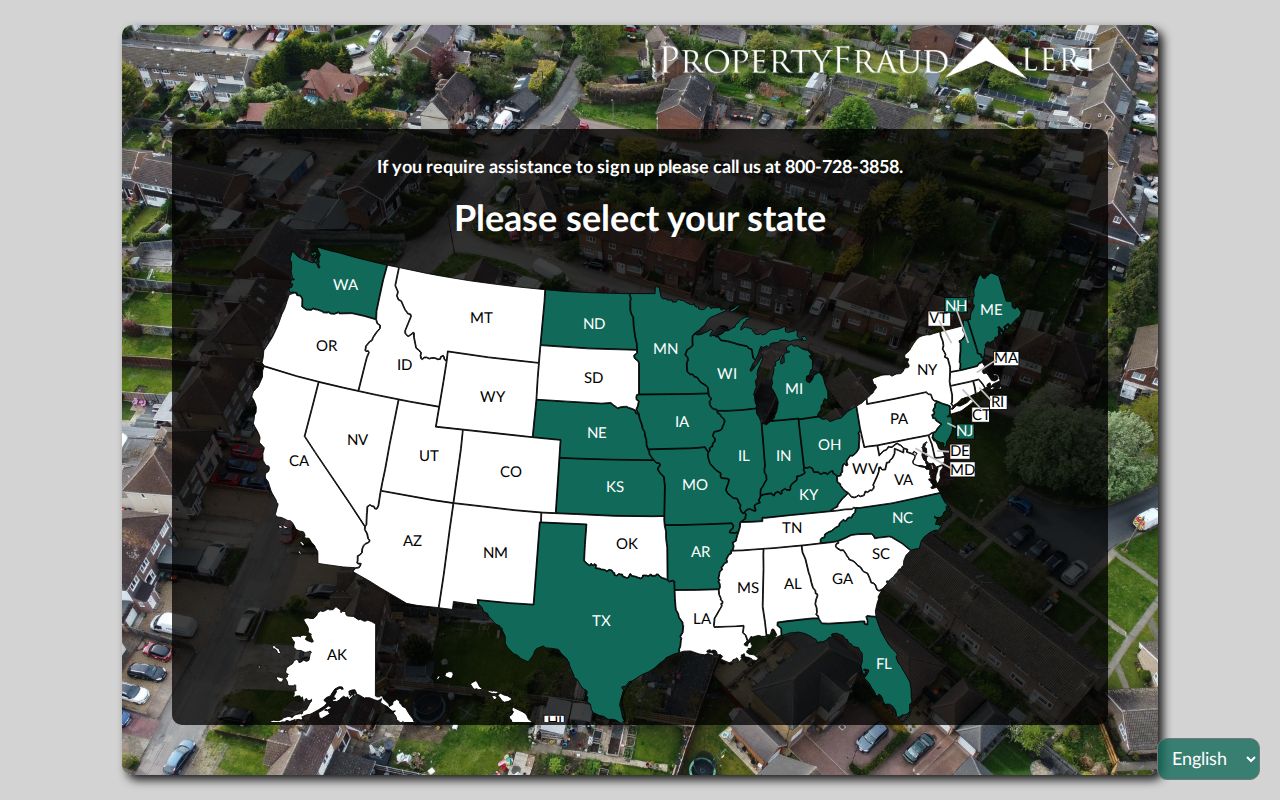
Use the alert as a prompt to verify a record with the county custodian.
Accessing Polk County Property Records Offline
Online access is not the only way to reach Polk County property records. The Register of Deeds keeps public office hours. They run Monday through Friday, 8:30 a.m. to 4:30 p.m. Title and genealogy appointments run from 9:00 a.m. to 3:30 p.m. Staff will not perform the title or genealogy search for you. Plan to do that work yourself. Public access stations are available for index work. Call ahead when older books or an archived file may need retrieval from storage.
An open-records request works best when it names the exact parcel. It should also give the record type, the date span, and the preferred format. Wisconsin's Public Records Law, Wis. Stat. §§ 19.31-19.39, favors access to existing government records. It does not force a custodian to build a new title abstract. Copy, location, and mailing costs are permitted. Ask the county for the current amounts instead of trusting an old fee note.
Requesting a deed copy goes faster with the instrument number, if you have one. Say whether an emailed PDF or a mailed paper copy suits you. For a tax or mapping question, give the municipality and tax year along with the parcel number. Those details let staff route the request. That avoids turning it into a search for a conclusion the source record does not make.
Polk County Property Records Have Limits
A tax card, a deed, and a map answer different questions. The tax card carries the assessor's owner display and yearly figures. The deed records an accepted transfer instrument. A plat or survey fixes land geometry. A property value is not automatically a sale price. An aerial image does not settle a boundary. Keep these distinctions straight when comparing a current result against older books.
Wisconsin's open-access policy still leaves privacy limits in place. Safe at Home participants may use a substitute address, and certain records are withheld or redacted under specific rules. Put Polk County property records to lawful uses: research, purchase diligence, tax questions, and civic oversight. Never use an owner name or mailing address to stalk, harass, or harm anyone.
Limits of Polk County Property Records
Public records show what a custodian holds, no more. Coverage and dates depend on the record set. A property search can lean on them, yet they cannot prove a title is clear, that GIS lines are surveyed, or that an assessed amount equals an appraisal. Verify any key fact with the office holding the source record. That habit prevents most errors.
Lawful use. Polk County records support property research, purchase diligence and civic transparency. A record search is not a title opinion or survey, and owner information must never be used to stalk, harass or harm a person.