
Tracing Polk County Former Owners
Polk County former-owner research rests on two Register of Deeds ranges that do not match. The county reports land-record images back to 1933. Indexing reaches back only to 1995, with back-indexing still under way. The index points you to names; the image supplies the instrument and the legal description. Historical plats show how land was laid out. The county publishes no complete inventory of its older deed books on its static pages. Keeping these sources separate keeps a map from being mistaken for proof of a transfer.
| Source | Years It Covers | Where Held | What It Shows |
|---|---|---|---|
| Recorded land index | 1995 to present documented; back-indexing ongoing | Polk Register of Deeds / Fidlar | Party and instrument search leads. |
| Recorded land images | 1933 to present documented | Register of Deeds, Laredo or Tapestry | Instrument image and land description. |
| Polk County plat book | 1887 | Wisconsin Historical Society | Historic city, village and township layouts. |
| Earlier books and indexes | Runs vary; complete inventory not located | Ask Register of Deeds or historical custodian | Possible older chain material; verify availability. |
A transfer after 1995 starts with the online party index. Open the image from there. For an earlier transfer, lean on the 1933 image reach. Ask the office about any index gap. Turn to the 1887 plat book only after a deed or legal description points you to the relevant area. It is not an owner list.
Walking Polk County Deed Chain Backward
Every deed chain is built the same way in Polk County. Begin with the current grantee and the deed that conveyed the parcel to that party. Read the grantor, the recording date, the instrument reference, and the legal description. Search that prior grantor as a grantee next. Confirm the older deed describes the same property before adding it to the chain. Some names are common in Polk County deed records. The parcel, municipality, and legal description rule out a different tract.
- Find the current owner's acquisition deed as grantee.
- Record the grantor, legal description, date and document number.
- Search the grantor as the earlier grantee and compare the land description.
- Repeat until the index stops, then ask the Register of Deeds about older books or images.
- Grantor
- The party conveying the interest in the document.
- Grantee
- The party receiving that interest.
- Chain of title
- The ordered sequence of recorded transfers for the same land.
- Reverse walk
- Searching each prior grantor as the next grantee.
- Warranty deed
- A deed with covenants; the instrument's wording controls.
- Quitclaim deed
- A deed conveying the grantor's stated interest without a full-title promise.
Polk County Ownership Records by Era
Polk County's documented index reaches to 1995 while its land-record images reach to 1933. The county says back-filling of the index continues. A blank older-party search is therefore not a reliable chain endpoint. The online system itself began in 2008. Earlier deed books may require an office search. The official material publishes no complete book-by-book inventory. It also reports no courthouse fire that destroyed land records.
Lawful use. Use prior-owner records for house history, property diligence and legitimate title work. Never use a past address or owner name to track, threaten or harass a living person.
Finding an Earlier Polk County Deed
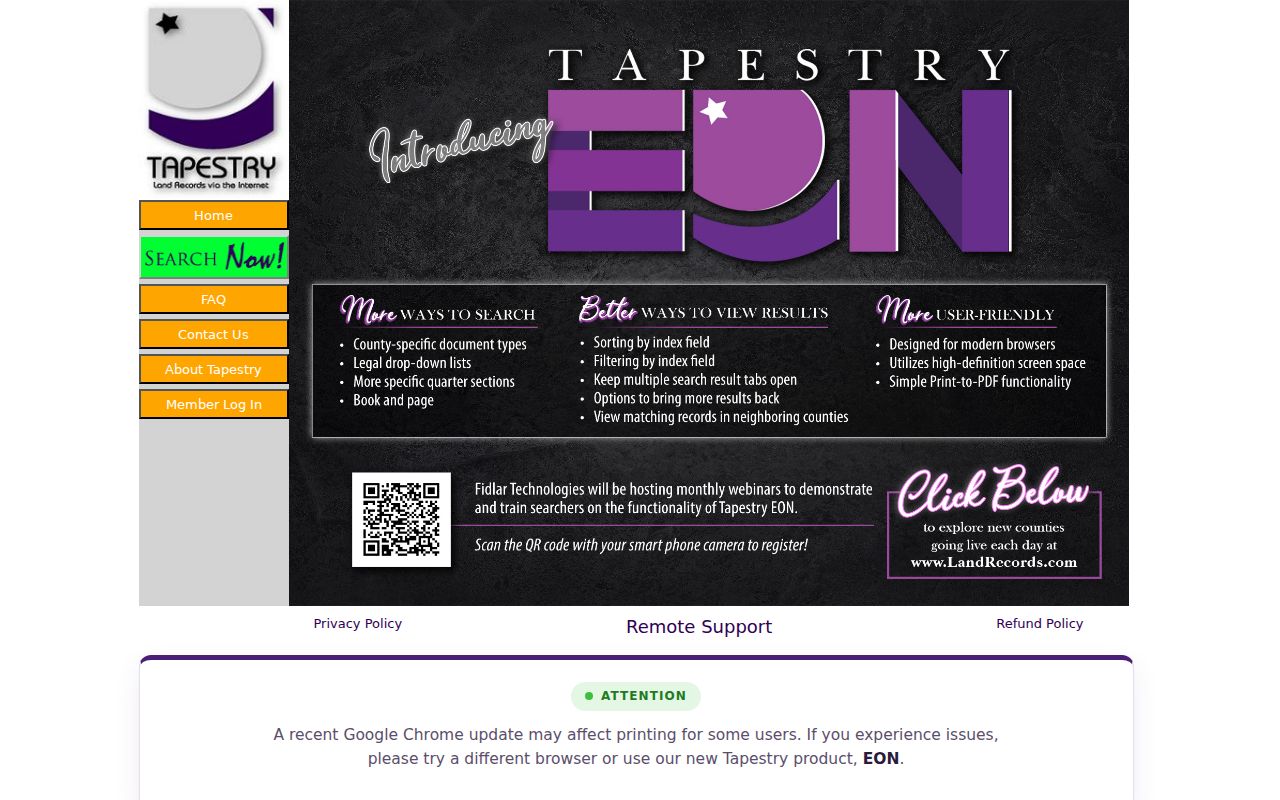
The Polk County Register of Deeds provides recorded-document searching through its online land-record services. Laredo is the subscription route. Tapestry runs on a pay-as-you-go basis. The index is organized around recorded parties and instrument details. Because of that, a parcel address alone may not carry a researcher through every transfer. Once a document number from one deed is in hand, open that image. Verify the legal description. Then pull the parties and dates needed for the preceding search.
For a look at the pay-as-you-go service, see the Tapestry search page. Its interface is one route into the official record system. The county Register of Deeds remains the custodian. It can answer questions about a missing image, an older book, or a certified copy.
Not every instrument affecting ownership is a deed. A mortgage, satisfaction, easement, plat, certified survey map, or lien can clarify interests or encumbrances. It can do so without transferring the entire property. Record the instrument type and document number before moving backward. Compare the land description rather than trusting a name match alone.
Using Polk County's 1887 Plat Book Carefully
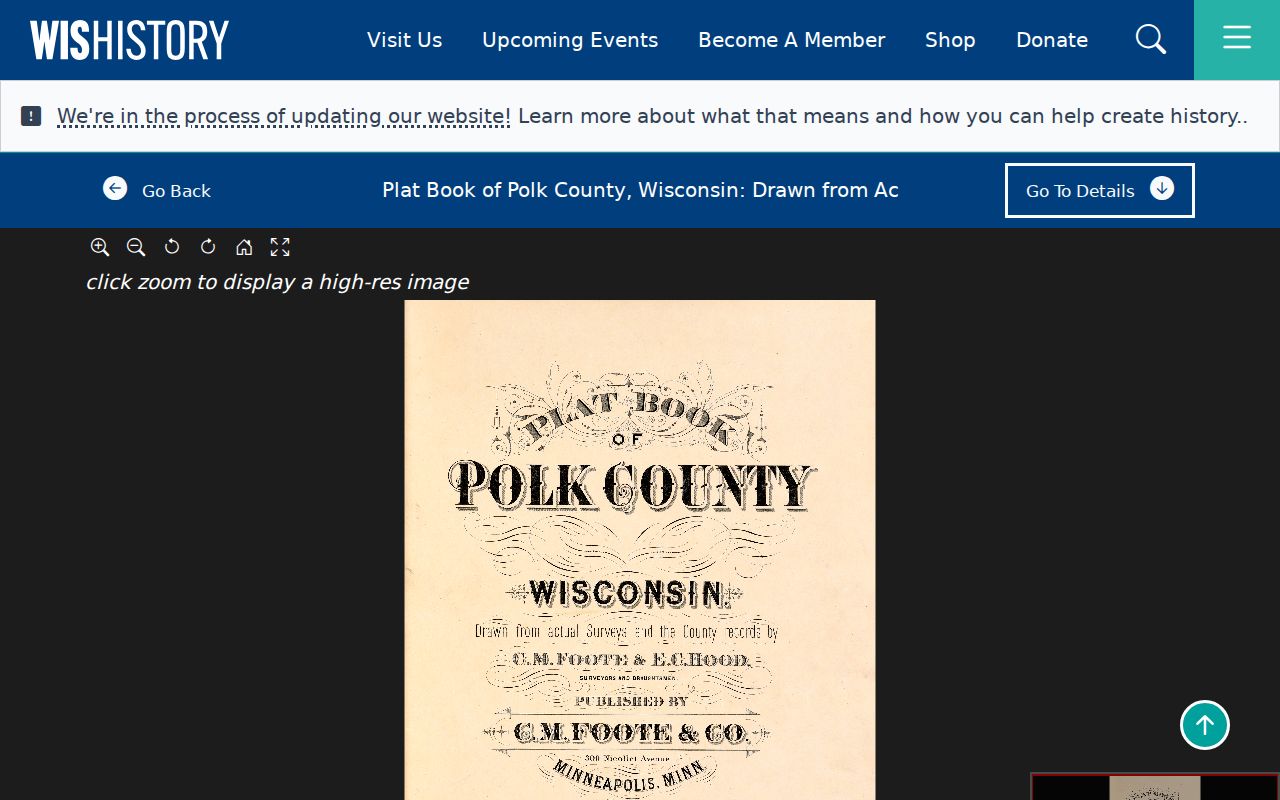
The digitized 1887 Polk County plat book is a handy historical reference for townships, villages, and land patterns. It can orient a house-history project. It helps when current street names or lot lines look nothing like older descriptions. It does not list former owners. It does not prove a parcel passed from one person to another. Treat it as a dated map. Then return to recorded instruments for the chain of conveyances.
The Wisconsin Historical Society hosts the 1887 Polk County plat book record. A separate 1871 county map also appears in the historical material. Comparing editions can show how the settled landscape changed. But plat books, tax maps, and deed descriptions serve different purposes. A line on a historical plat is not necessarily a modern legal boundary.
Start by identifying the current municipality. Get the legal description from the property roll or the deed. Match those clues against the historic township or village labeling. If the location seems uncertain, ask the local library or historical society. Ask which map editions and indexes they hold. No single map series resolves every changed road name. The county likewise publishes no comprehensive roster of earlier Polk County deed books. The Register of Deeds remains the place to ask.
When a Former Owner's Name Leads to Probate
A deed chain can stall for reasons beyond missing records. Sometimes the owner of record dies. Sometimes a trust or an estate holds title instead. Probate case records may show who had authority to act for an estate, but court filings are a separate record set from the land instruments at the heart of Polk County property records. Wisconsin Circuit Court Access provides a statewide case lookup, and a courthouse public-access terminal can serve as another route. Chase case context only when names and dates suggest probate; a case result alone never proves that a particular parcel was transferred.
Vital-record genealogy collections can help with historical family research. They cannot replace a deed or court order. Wisconsin limits genealogy access by record type and age. Consult the Wisconsin Department of Health Services genealogy information for the current collection rules before relying on a name match.
Family-history work brings a trap. One surname can span generations. It can also appear in unrelated households across Polk County. Match the name against the township, legal description, instrument date, and other parties, and if an estate or trust is involved, follow the recorded personal representative's deed or trustee instrument to confirm it describes the same land.
What to Do When the Online Chain Has a Gap
A blank result does not mean the deed never existed. Polk County's documented index begins in 1995, and back-indexing continues, though images reach back to 1933. Try alternate spellings, initials, and both sides of a likely transfer. If the current owner appears but the earlier grantor does not, note the instrument details and ask the Register of Deeds which older indexes or books cover that period.
The Register of Deeds sits in the Polk County Government Center at 100 Polk County Plaza, Suite 160, Balsam Lake, WI 54810. The office lists 715-485-9240 and weekday hours of 8:30 a.m. to 4:30 p.m. Title and genealogy appointments run 9:00 a.m. to 3:30 p.m. Staff will not perform a title search for requesters, so bring the parcel's legal description, known party names, approximate years, and any document number for a focused inquiry.
Hard-copy requests call for a self-addressed stamped envelope, and PDF copies may come back by email. Ask the custodian about current copy charges and the preferred request method, since the office publishes no stable fee schedule. A certified copy suits formal purposes, while an ordinary image for house history should simply carry its recording information.
Keeping a Reliable Former-Owner Timeline
Keep a research log. Give one row per instrument: recording date, instrument date, document number, grantor, grantee, instrument type, and the legal description as written. Note how each description matches the parcel you trace. That habit exposes gaps fast. It also flags a deed covering only part of a tract, or a transfer among co-owners that is not a full change in ownership.
Separate confirmed transfers from clues. A tax listing can tie a name to a parcel in a given year. An old plat can show a mapped name or tract. Neither carries the evidence of the deed itself, and a current parcel number may not have existed in an earlier record. Street addresses and parcel identifiers change. The legal description, township, range, section, lot, and block can bridge the gap.
When the backward chain reaches the online boundary, state that limit plainly in your notes. Then continue elsewhere. Older tools still exist. A custodian-assisted index, historical map, probate record, or local archival collection can extend the timeline, but keep each source's date and purpose attached to the conclusion. The Polk County deed-record guide covers the instrument search. For the owner shown on the current tax roll, see the current-owner lookup guide.